What is RFID and is it the right move for your gear?
The Ultimate Guide for High-Volume Ops
🔎 The "great gear hunt" is a universal pain point. That moment of frantic searching, the all-day audit, the headache of checking in hundreds of items. It's frustrating, and it's a massive drain on time and money.
What if there was a better way to verify every piece of equipment, even when it's hidden in a case or on a packed shelf? That’s where RFID comes in.
This guide cuts through the tech jargon to explain what RFID is, what it isn't, and most importantly, helps you figure out if it’s the right solution to swap hours of tedious manual scanning for moments of certainty.
What is RFID?
At its core, Radio Frequency Identification (RFID) is a technology that uses radio waves to read information from a tag. Unlike barcodes or QR codes, it doesn't need a direct line of sight. You can simply sweep a scanner over a group of items, and it will read all the tags at once, even if they're in a case, a closet, or behind other equipment.
This is the key difference and why it's so powerful for high-volume environments. For a broadcast production crew, this means you can perform a lightning-fast audit of an OB truck or flypack before a live event, ensuring all critical equipment is accounted for in minutes, not hours.
🧐 The Tech Stack: Defining Your Options
When you're dealing with high-value gear, the last thing you need is the wrong technology slowing you down. Here's a quick rundown of the other main players in the tracking game.
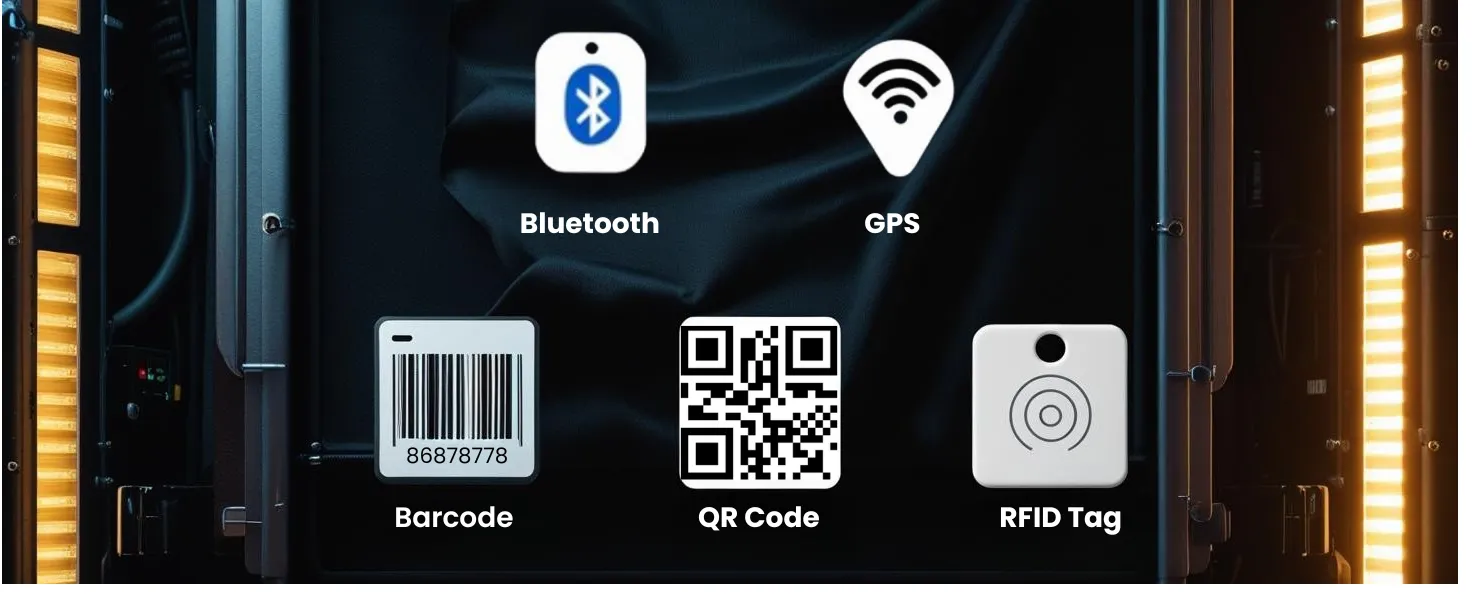
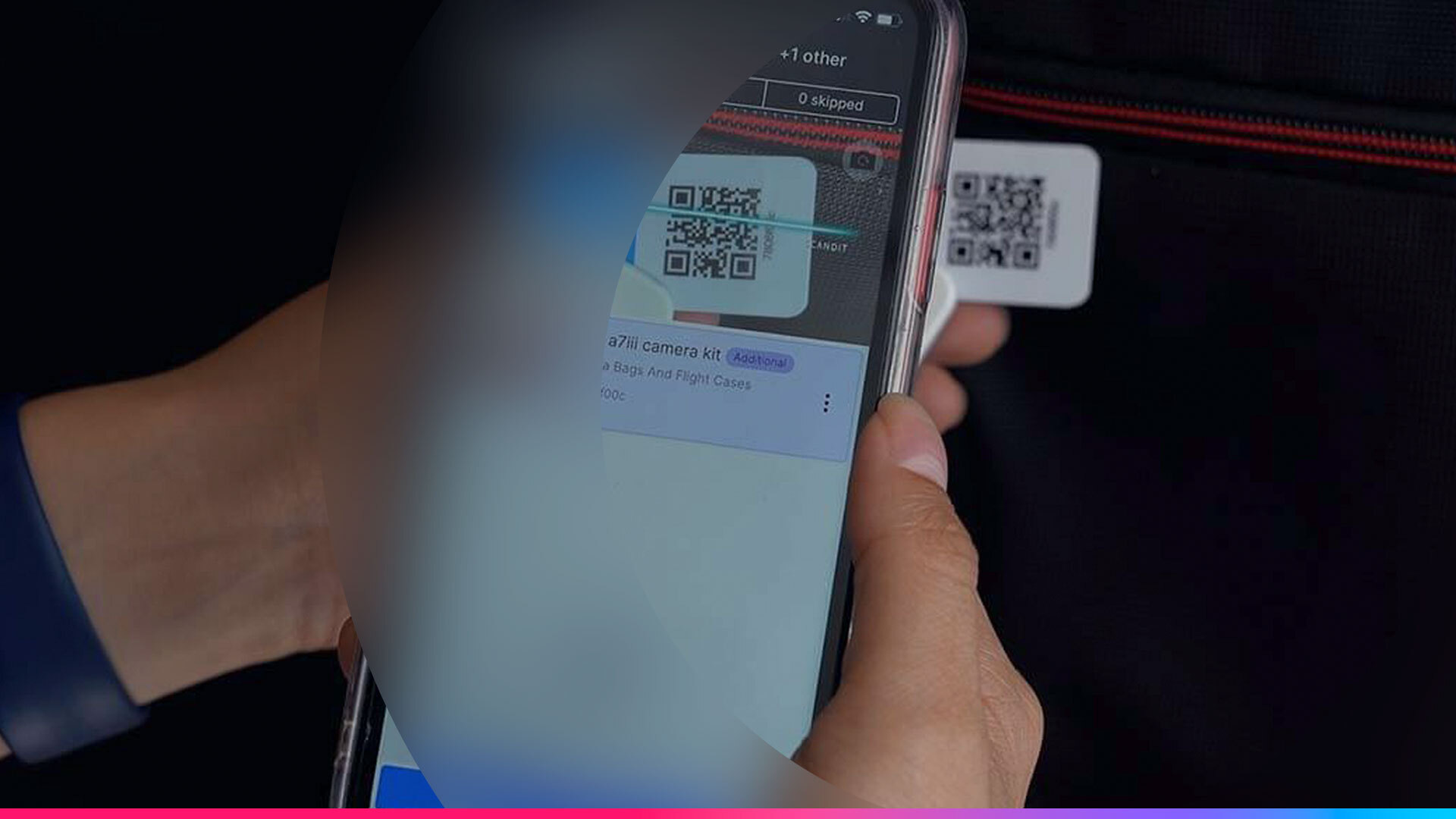
Barcode / QR Code: These are printed optical patterns that store data. They are low cost and widely adopted, making them great for individual checkouts where you can scan each item one by one.
GPS Tracking: This technology uses a network of satellites to determine an object's real-time location. It provides continuous, real-time location data, so you always know where an asset is.
Bluetooth Low Energy (BLE): A wireless technology used for short-range data transfer between devices. It is often used for proximity-based tracking, helping you find a single item within a limited area.
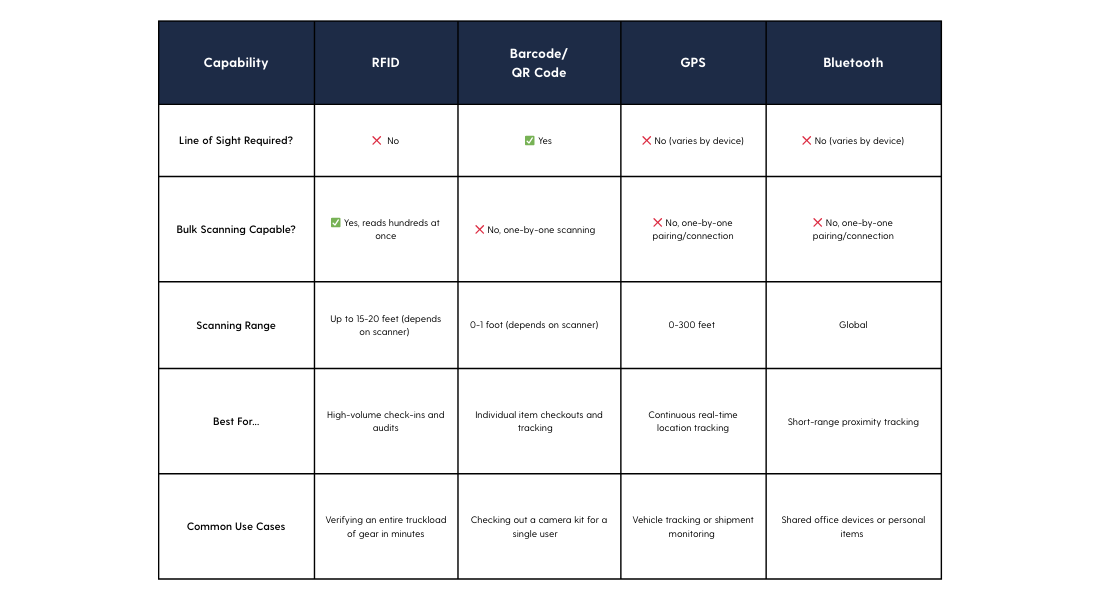
💥 The Big Comparison: RFID vs. The Rest
Choosing the right tool for the job is critical. It’s easy to confuse these systems, but understanding what each is built for can save you a lot of time and frustration.
💡 Pro Tip: You can use a dual-tagging approach, with both an RFID tag and a QR or barcode on your equipment labels, for maximum flexibility. This allows for the speed of RFID for bulk operations and the precision of a QR code for single-item checkouts. A film crew can use RFID to verify every piece of gear is packed after a venue load-out, while still having a QR code for a quick checkout back at the home base.
The Hidden Costs of Manual Tracking
When you're running a large, complex operation, manual tracking isn't just an inconvenience, it’s a business risk. Relying solely on one-by-one scanning for a high volume of equipment can lead to a dangerous cycle where tedious audits get skipped, resulting in inaccurate inventory and costly, unnoticed losses.
RFID addresses these challenges by providing:
Efficiency: Turn hours of manual scanning into minutes of simple work.
Accuracy: Eliminate the risk of human error by scanning hundreds of items simultaneously.
Confidence: Gain certainty that all equipment is accounted for throughout your operation and before critical deadlines with multi-point verification.
Is RFID Right for You? A Simple Checklist
RFID isn’t for everyone, but it can be a game-changer for large, mobile operations. Consider if your team fits this profile:
Scale and Mobility: Do you manage thousands of items across multiple locations or in mobile environments like OB trucks or film sets?
Budget: Do you have the budget for a professional-grade solution, including hardware (scanners and tags) and software?
High-Volume Workflows: Do you regularly check in or check out a high volume of items at once? Or do you frequently need to quickly verify entire kits, rooms, or vehicles?
Final Verdict: The Right Tool for Your Business
Ultimately, there is no one-size-fits-all solution. Barcodes are great for simple tracking, while GPS is a must for continuous, real-time location. But for teams with a high volume of shared, frequently moving, mission-critical equipment, RFID is unmatched.
It’s about finding a system that brings order to chaos, giving your team peace of mind, and getting back to what you do best, without the great gear hunt.
As the program marketing lead, she's the one who keeps Cheqroom's vision and our customers' needs in sync. She loves bringing new features to life and telling the world about the magic of how Cheqroom keeps work in motion.
Whether she is behind the scenes crafting a new strategy or in front of the camera sharing our customers' stories, her mission is to turn equipment operations into a superpower, one story at a time.
RFID tracking is a method for managing high volume equipment that allows users to instantly scan hundreds of items at once. It creates a complete verification chain across an entire workflow, enabling scanning from check-out to on location verification to final check-in.
Is RFID the same as live tracking or GPS?
No, RFID is not the same as live tracking. While RFID allows you to scan items without line of sight, it doesn't continuously track location. It is a point in time technology that verifies an item's location and status at the moment of scanning.
What’s the difference between RFID and barcode scanning?
Barcode scanning requires you to scan each item one by one with a direct line of sight. This is great for individual check-outs and returns, but can become tedious and time consuming for large jobs. RFID enables bulk scanning, allowing you to scan hundreds of items at once with a single sweep, even when they're inside cases or behind other equipment.
What does an RFID system consist of?
An RFID system generally consists of hardware and software. The hardware includes a fixed or handheld RFID scanner and RFID tags that are physically attached to each item. The software is the platform that receives the data from the scanner to manage and report on the items.
What kind of hardware do I need to get started with RFID?
To get started with an RFID system, you will need a fixed or handheld RFID scanner and RFID tags for each of your items. The hardware must be purchased separately from the software. Many solutions are designed to be user friendly with straightforward integrations.
Is RFID expensive?
RFID is considered an investment, but the real cost is often in the time wasted on manual scanning and the expensive gear that goes missing. The hardware costs typically include a handheld scanner, which can range from $1,200 to $3,000 or a fixed RFID system, which can range from $2,000 to $8,000, as well as individual tags, which cost between $1 and $3 per tag.